
RED NOSES regularly releases research insights that draw together findings from the world of clowning science. Furthermore, these short publications make research accessible to artists, healthcare professionals and policymakers alike.
Research Nuggets RED NOSES regularly releases research insights that draw together findings from the world of clowning science. Furthermore, these short publications make research accessible to artists, healthcare professionals and policymakers alike.
Research at a Glance highlights findings from one or more healthcare clowning studies in a one-page format. Above all, it offers a quick and accessible overview of the latest evidence.
Research Nugget Series:

How arts and humour can support the mental health of older adults in long-term care.
Moving into a care facility marks a significant change in people's lives. Indeed, losing independence and facing health issues can greatly impact mental health. Furthermore, the ageing population and increasing shortage of care staff make additional wellbeing support essential.
Healthcare clowns visiting older adults offer psychosocial support in several ways. They provide individual attention, spread joy and laughter, retrieve old memories and build on each person's abilities. Moreover, their artistic interventions include improvised and participatory performances drawing on storytelling, circus and music. As a result, these create possibilities for self-expression and mobilisation of resources.
This healthcare clowning research insight collates scientific evidence on the positive impacts of clowning on older people in care homes, people living with dementia and those in palliative care.
You can access the full Research Nugget here
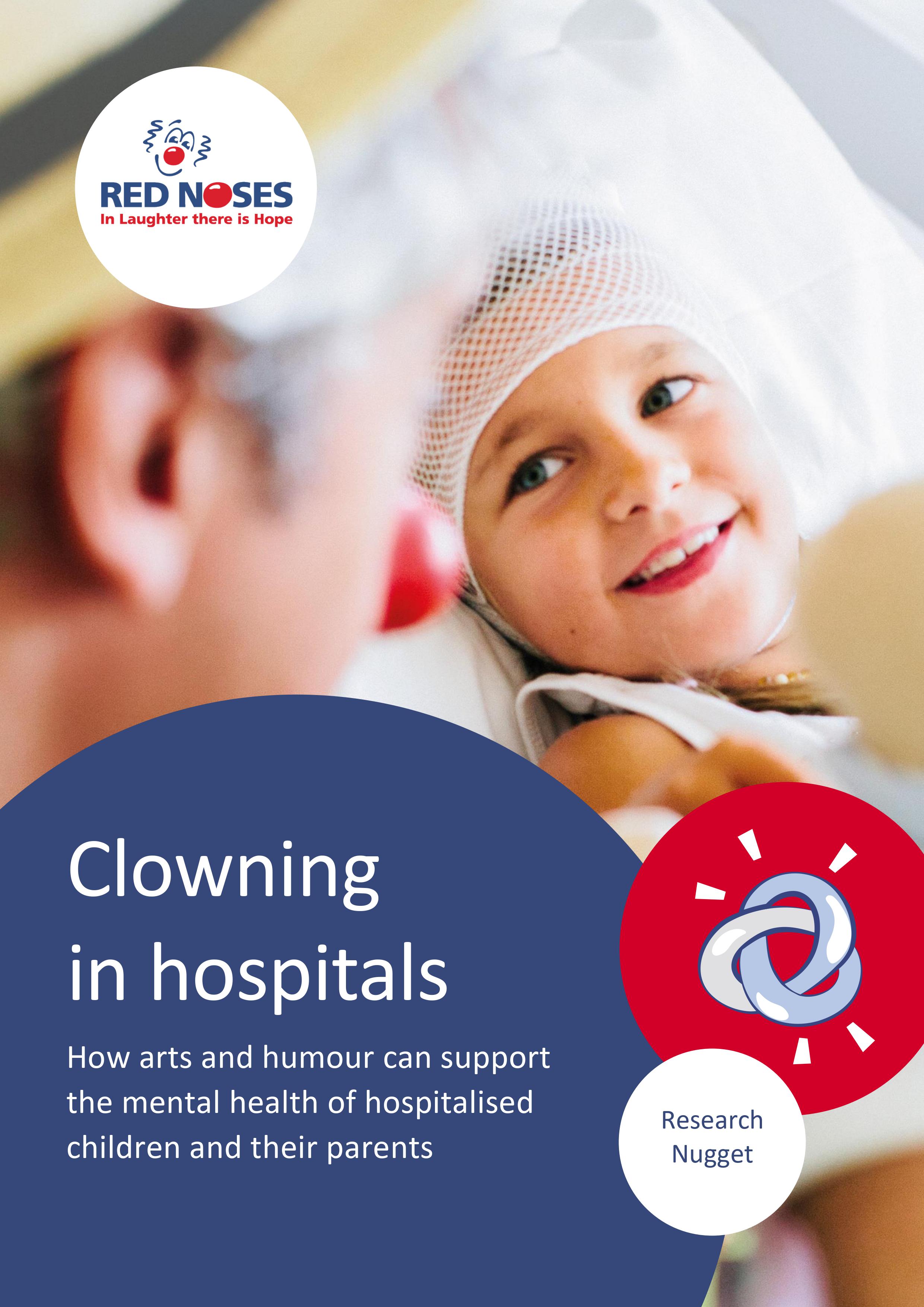
How arts and humour can support the mental health of hospitalised children and their parents
Hospitalisation can strongly impact the mental health of children and their parents. Indeed, medical treatments often bring anxiety, stress and other difficult emotions. Furthermore, RED NOSES offers different clowning formats, from bedside visits to support during invasive medical procedures. Together, these aim to provide moments of joy and relief.
This healthcare clowning research insight compiles findings from scientific studies on clown visits. Moreover, multiple studies show that clowning decreases stress and anxiety. As a result, it also increases positive emotions and cooperation with medical staff. Additionally, parents benefit too, either by enjoying the clowning themselves or by seeing their children experience joy.
Above all, this research insight provides scientific evidence that healthcare clowning offers important mental health support to hospitalised children and their parents.
You can access the full Research Nugget here
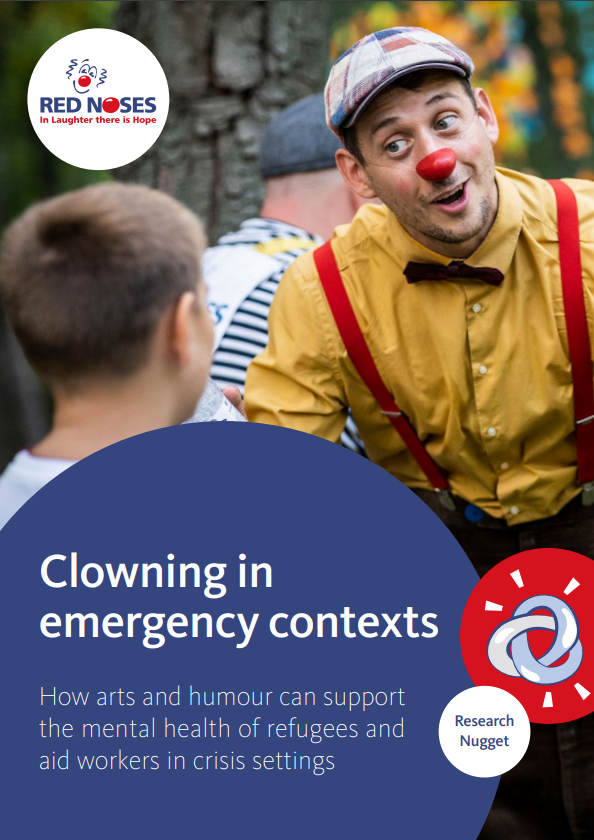
How arts and humour can support the mental health of refugees and aid workers in crisis settings
This healthcare clowning research insight analyses the mental hardship of people living and working in refugee contexts. Furthermore, it explains how creative and humorous activities including clowning bring relief and mental support to people in crisis.
Indeed, the evidence shows that arts and clowning reduce mental health issues such as stress and anxiety. Moreover, they improve feelings of self-esteem, confidence and general mental health. As a result, RED NOSES created the Emergency Smile Programme specifically to bring emotional support to people affected by forced migration.
Additionally, this research insight focuses on the stressors affecting humanitarian workers. Reports by international organisations show that stress and burnout among aid workers are widespread and often overlooked. Therefore, RED NOSES developed the Humour Relief Workshop, a safe space for aid workers to relax, learn stress-coping techniques and connect with colleagues.
You can access the full Research Nugget here
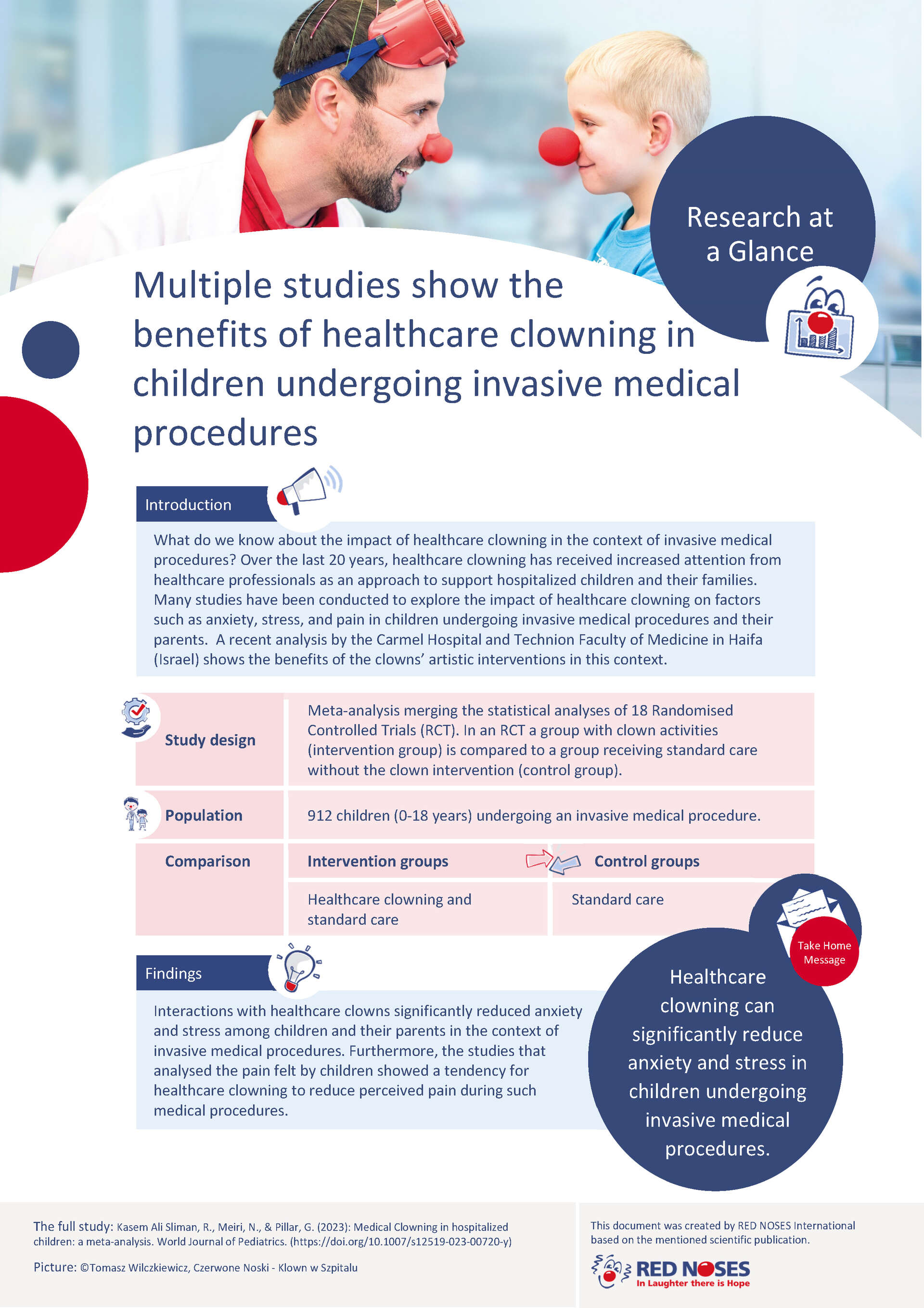
Research at a Glance
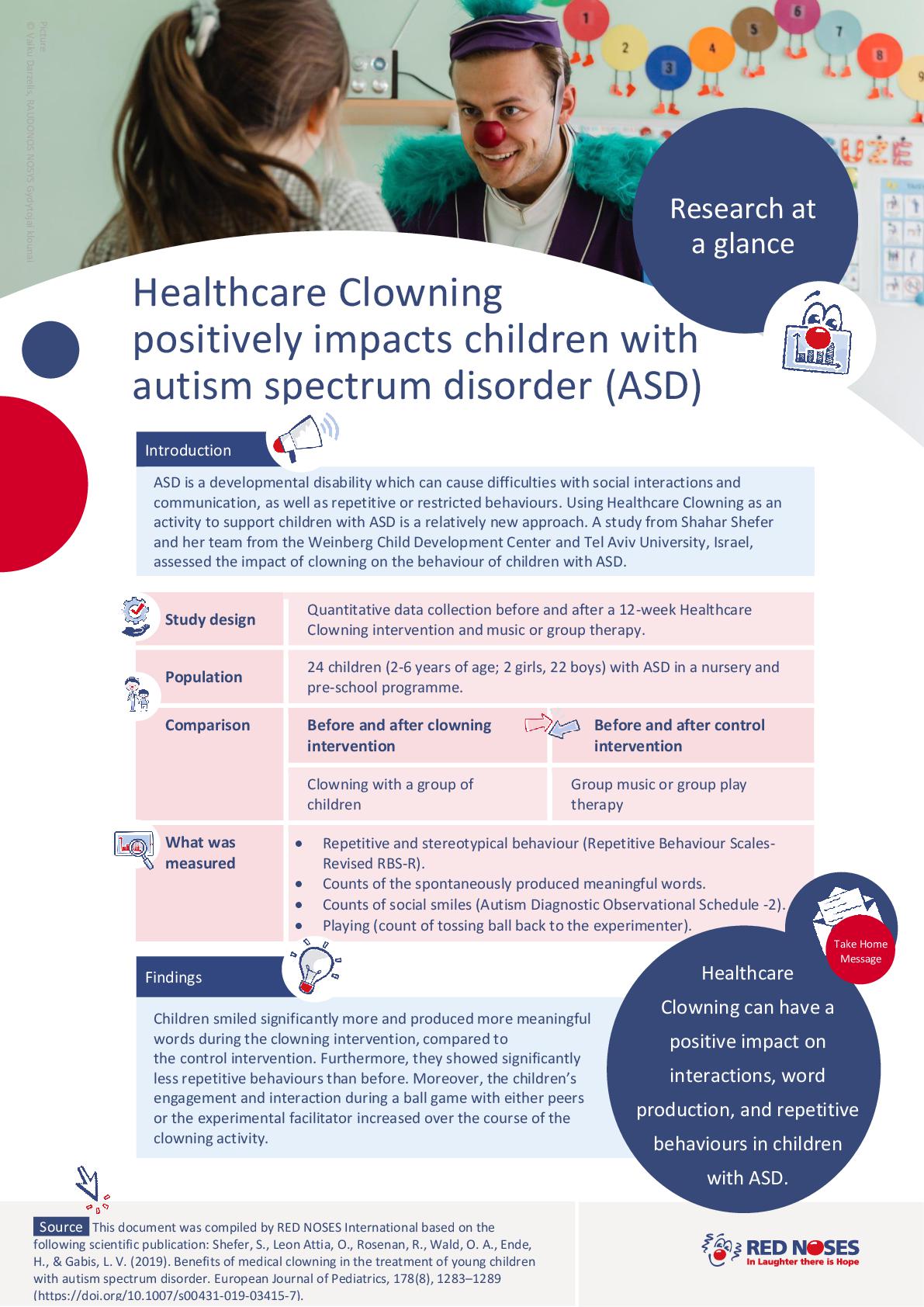



Clowns & science
Our work at RED NOSES is strongly supported by scientific evidence regarding the power of humour.
Furthermore, through their artistic interventions, our clown artists positively impact the mental health and wellbeing of the people they work with. Above all, they help alleviate difficult emotions such as anxiety, fear and stress.
If you’d like to find out more about the science behind the art of clowning, visit our Research Database: