
Laughter is serious business: here's the science to prove it
World Laughter Day: why laughter is one of the most powerful things we can do for our wellbeing
Every year on the first Sunday of May, World Laughter Day reminds us of something we all know instinctively—that laughing feels good. But laughter is far more than a pleasant moment. Science shows it is one of the most effective tools we have for human wellbeing.
What happens when we laugh?
Laughter triggers an immediate response in mind and body. It releases tension, shifts our emotional state, and—crucially—it connects us to other people. Research compiled in the RED NOSES Research Database, a collection of hundreds evidence-based studies, confirms that humour and laughter reduce anxiety, alleviate perceived pain, and strengthen social bonds.
In hospital settings, children who interact with healthcare clowns before surgery report measurably lower fear and worry. In some studies, clown visits proved more effective at reducing pre-surgery anxiety than standard sedative medication. Parents benefit too— witnessing their child laugh reduces their own stress levels at the same time.
For older adults in care homes, humour-based interactions reduce loneliness, support cognitive function, and improve quality of life—including for people living with dementia. In humanitarian settings, laughter helps children affected by crisis and displacement to process trauma, rebuild a sense of normalcy, and reconnect with the world around them.
Why does it work?
Humour arises from incongruity—the gap between what we expect and what actually happens. That surprise creates a kind of mental reset. Tension releases. Perspective shifts. A clown walking into a hospital ward does not ignore the difficulty of the situation. They create a space where people can, for a moment, feel like themselves again.
Laughter is not a luxury
The World Health Organization has been clear: artistic and humour-based interventions are genuine tools for mental health and social wellbeing, especially for the most vulnerable. Laughter is not an optional extra—it is a human need.
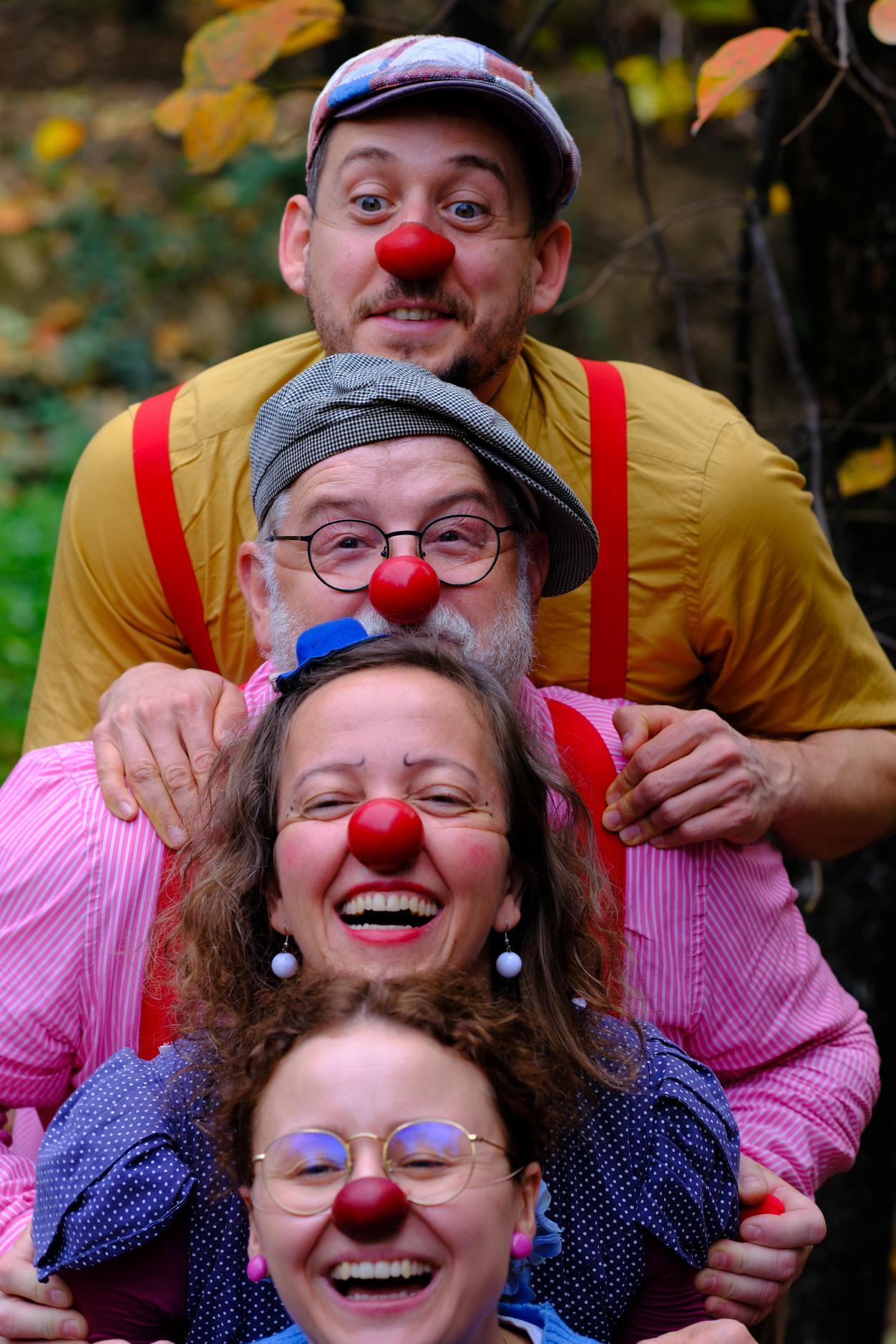
At RED NOSES International, we have built our entire mission around this truth. Since 1994, our professional healthcare clowns have brought the restorative power of laughter to hospitals, care homes, and crisis zones across eleven countries—reaching hundreds of thousands of people every year.
This World Laughter Day, we invite you to take laughter seriously. It might be the most human thing we do.
 Enlarge photo