
A day for happiness, a moment for reflection
Happiness is often treated as something self-evident, an idea we celebrate without questioning. The International Day of Happiness invites recognition, but it also offers something more valuable: a moment to reflect on what happiness actually means in real life.
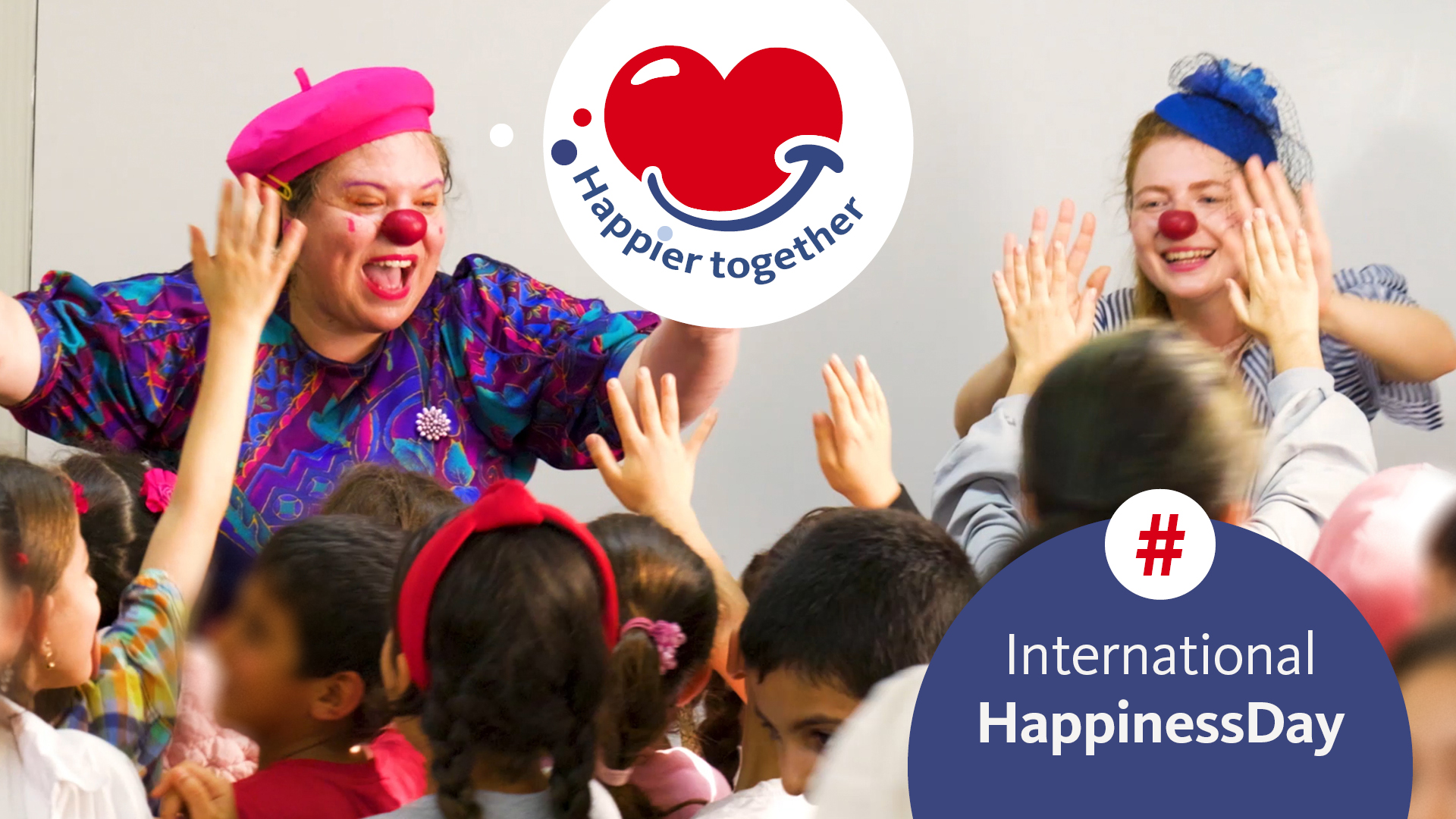
At RED NOSES, this question is not theoretical. It is encountered every day in hospitals, care homes, and crisis-affected settings, where professional healthcare clowns meet people facing illness, uncertainty, or isolation. In these environments, happiness is not a stable condition or an expectation. It is something immediate, often fragile, and deeply human.
 Enlarge photo
This perspective challenges common assumptions. Happiness is not always visible or sustained. It often appears in brief, meaningful moments, shaped by human connection, emotional presence, and the ability to respond to people as they are, in an inclusive and empathetic way.
When happiness is put to the test
Happiness becomes most meaningful in places where it is least guaranteed.
Hospitals, long-term care facilities, and humanitarian contexts are defined by vulnerability. Patients experience stress, fear, and loss of control. Older citizens individuals face isolation and cognitive decline. Medical staff operate under constant pressure. In these conditions, emotional well-being is not separate from care, it is an essential part of it.
This is where RED NOSES operates. For more than 30 years, the organisation has worked at the intersection of art and healthcare, now active through 11 partner organisations across 10 countries. Our professionally trained healthcare clown artists are providing structured psychosocial support through artistic interaction.
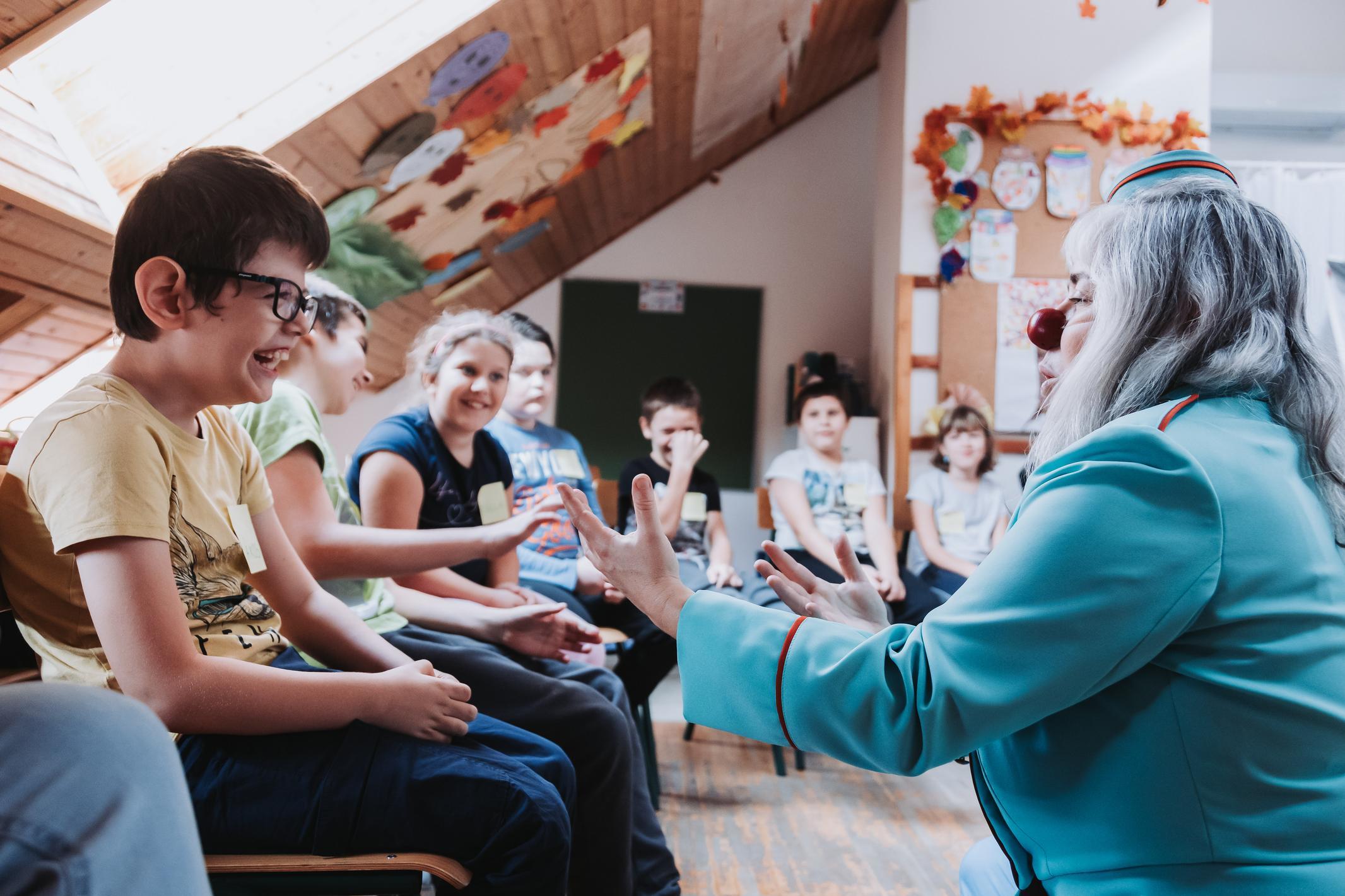
At a child’s bedside before surgery, a clown can reduce anxiety through play and trust-building. In care homes, they reconnect with individuals through music, humour, and memory-based interaction. In crisis settings, they support vulnerable people, offering moments of relief not only to affected communities but also to healthcare workers, caregivers, and medical staff.
These interventions are brief, but their effects are measurable. Healthcare clowning has been shown to reduce stress and anxiety, improve patient cooperation, and support emotional stability. In this context, happiness is not an added value - it becomes part of how care functions.
 Enlarge photo
 Enlarge photo
 Enlarge photo
Happiness as a universal aspiration
The General Assembly of the United Nations recognises happiness and well-being as universal goals and aspirations and emphasising their importance in public policy. This recognition is supported by research. The World Happiness Report 2025 identifies social connection as a key driver of happiness, influencing mental health, resilience, and overall life satisfaction. People who are more socially connected are less stressed, less isolated, and better able to cope with challenges.
At the same time, the report highlights declining well-being among young adults, linked to increasing loneliness and reduced meaningful interaction, reinforcing the urgency of addressing connection as a societal need.
RED NOSES operates directly within this framework. By creating moments of genuine human connection in environments marked by stress and isolation, its programmes translate global priorities into practice, making happiness tangible and relevant where it is most at risk.
Rethinking and honouring happiness
The International Day of Happiness is not simply a celebration. It is a call to reconsider how we define and recognise happiness. RED NOSES demonstrates that happiness does not depend on ideal conditions. It can emerge in moments of connection, even in the presence of difficulty. It is not measured by duration, but by depth and relevance.
To honour happiness is to acknowledge its role where it matters most: in supporting people through vulnerability, strengthening human connection, and contributing to emotional well - being.
 Enlarge photo